This seminar focuses on what we call the ongoing ‘appification’ of borders. We examine contemporary trends in the governance of borders and migration in which mostly smartphone-based software has become a prominent tool. How have apps changed borders and the bodies that cross them? How does the use of border apps contribute to blurring the line between public and private? To what extent do the use of outward facing apps by border agencies render the mobile phone, both its use and its search and seizure, a normal part of border crossing? To what extent do app stores emerge as a site for democratic deliberation about border and immigration policy? What are some research challenges associated with investigating apps? We explore these questions through a close analysis of the technical and political context of several border apps and digital travel processes including CBP One (USA), ArriveCan (Canada), and Travel to Europe (EU). We highlight how appification shifts the functioning and location of the border itself, and functions through both care and control and discuss some of the political stakes of this trend. We also discuss the challenges of studying technologies from the standpoint of the humanities and social sciences. These are challenges of a methodological and theoretical order with which we have grappled since the start of our engagement with biometrics and surveillance in borders and mobility.
About the Speakers
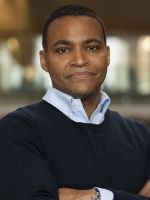 Philippe M. Frowd is an Associate Professor in the School of Political Studies at the University of Ottawa, Canada. His research draws on critical security studies and focuses on emerging transnational forms of governance of security in the Sahel region of West Africa. His research has primarily focused on irregular migration and border control in the region and has been the focus of his latest book Security at the Borders: Transnational Practices and Technologies in West Africa (2018, Cambridge University Press). Philippe also works on the politics of non-state security provision and dynamics of militarization and intervention in the Sahel more broadly. His work has most recently appeared in Third World Quarterly, Geopolitics, and African Affairs. He is an associate editor of Security Dialogue.
 Benjamin J. Muller is Professor of Migration and Border Studies at King’s University College at Western University, in London, Ontario, Canada, and a faculty member in the Centre for Theory and Criticism at Western University. Dr. Muller has published widely in books and academic journals and has for the past two decades provided countless academic presentations and guest lectures on issues of borders, sovereignty, security, surveillance, and biometrics. Consulted as an expert by Canadian Parliamentary committees, NATO, the European Science Foundation, INTERPOL and the World Customs Organization, Dr. Muller has also held several visiting research fellowships in North America and Europe. Dr. Muller has also served as an active executive member in the King’s University College Faculty Association for more than a decade, including serving as Chair for 5 years, and was the inaugural co-recipient of the KUCFA Copplestone-Csiernik Service Award in 2025.
 Can E. Mutlu is an Associate Professor and the Head of the Department of Politics at Acadia University in Wolfville, Nova Scotia. He holds a PhD from the University of Ottawa, alongside a BA and an MA from the University of Victoria. His research critically examines the intersections of sociology, technology, and global security. His current research investigates how international borders are becoming “smarter,” more digital, and more aesthetically “invisible.” Supported by the SSHRC, he works on projects examining the datafication of border security and the use of architectural design to mask security infrastructures. My work seeks to uncover how these socio-technical shifts—ranging from facial recognition kiosks to “ferocious architecture”—reshape the boundaries of citizenship and the daily experience of mobility. Dr. Mutlu is the co-editor of Research Methods in Critical Security Studies: An Introduction (with Mark B. Salter and Philippe M. Frowd) and Architectures of Security: Design, Control, Mobility (with Benjamin Muller).