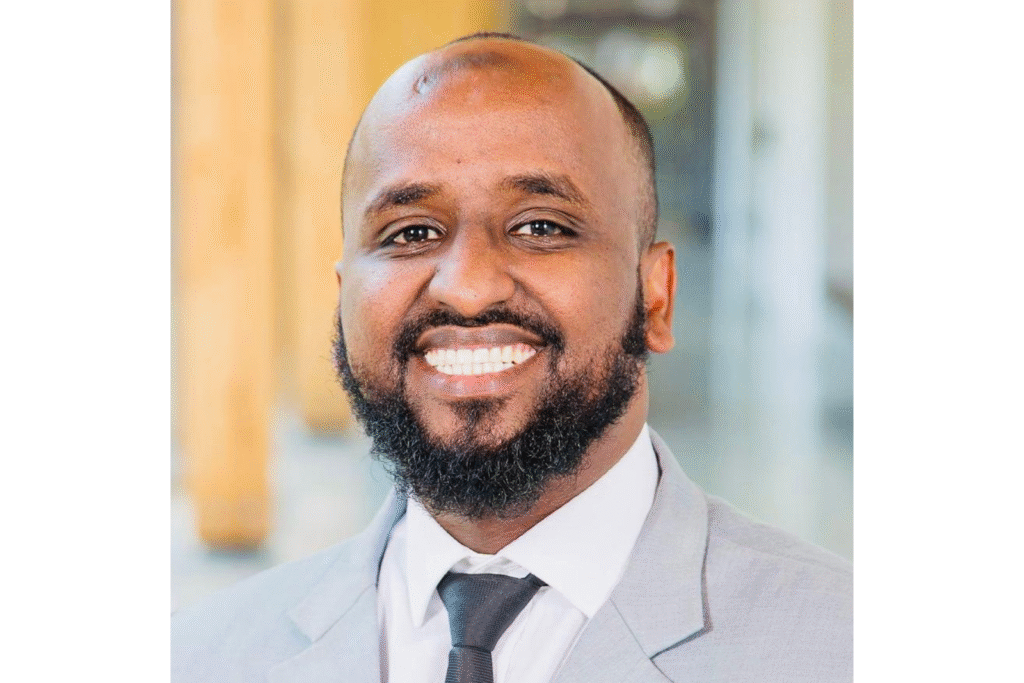
Zack Ahmed‘s dissertation defence.
This dissertation contributes to the scholarship on South-South migration by integrating food security into the analysis of urban governance and migrant livelihoods in Sub-Saharan Africa. While migration and development have been widely examined, their connection to food systems remains underexplored, particularly in urban settings where informality, displacement, and transnational mobility converge. The research addresses this gap by investigating how Somali migrants and refugees in Nairobi’s Eastleigh navigate food insecurity within overlapping systems of governance, inequality, and transnational exchange. It explores three dimensions: the structural and socio-economic determinants of migrant household food insecurity, the impact of the COVID-19 pandemic as a governance shock disrupting informal food systems and remittance flows, and the intersectional factors such as gender, documentation, and household composition that shape differentiated experiences of adaptation and resilience.
The study employed a mixed-methods design grounded in critical realism and intersectional epistemology, combining quantitative household surveys (n=268) with qualitative life-history interviews (n=30) and key-informant consultations. Standardized food-security measures, including the Household Food Insecurity Access Scale (HFIAS), Household Food Insecurity Access Prevalence (HFIAP), and Household Dietary Diversity Score (HDDS), were used to assess prevalence and severity, while qualitative narratives provided insight into the lived meanings of food insecurity, coping, and transnational obligation. The analysis revealed that 43 percent of Somali households were food secure, while nearly two in five experienced severe food insecurity. Income, education, gender, and employment status were the strongest predictors of household food security, and spatial disparities within Eastleigh highlighted uneven geographies of vulnerability shaped by policing, infrastructure, and tenancy.
The COVID-19 pandemic intensified these inequalities, with over 80 percent of households reporting income loss and two-thirds citing increased food expenses. Market closures and mobility restrictions disrupted informal trade and access to culturally appropriate food, exposing the fragility of migrant-dependent informal economies. Female-headed and undocumented households faced compounded deprivation but also demonstrated agency through community savings groups, remittance pooling, and collective coping mechanisms. The study situates these experiences within a multi-scalar theoretical framework combining Migration Systems Theory, Urban Informality, and Intersectionality-Livelihoods, showing how structural forces, governance regimes, and social hierarchies interact to produce and reproduce food insecurity in migrant communities.
The research makes four key contributions. First, it develops an integrated conceptual model linking migration, governance, and food systems, reframing urban food insecurity as a political and relational condition rather than a technical or humanitarian problem. Second, it advances Southern urban theory by showing that informality is not a symptom of governance failure but a central mode through which legality, access, and belonging are negotiated. Third, it introduces methodological innovation through a reflexive, mixed-methods design that combines standardized indices with culturally grounded narrative analysis. Fourth, it extends policy debates by positioning food security within frameworks of rights, inclusion, and urban citizenship.
Overall, the dissertation demonstrates that migration and food security are mutually constitutive processes. Mobility both mitigates and generates vulnerability within the unequal governance landscapes of African cities. For Somali migrants in Nairobi, food security is not only about access to food but also about recognition, stability, and belonging in an urban environment that simultaneously depends on and marginalizes them. The findings underscore the need for integrated urban and migration policies that recognize informal food systems, support women’s economic participation, and strengthen transnational safety nets. By situating these insights within the broader transformations of South-South migration and African urbanization, the study contributes to rethinking food security as a question of justice, governance, and everyday survival in the Global South.
Advisors: Dr. Jonathan Crush and Dr. Jenna Hennebry
Committee: Dr. Bruce Frayne
Internal/External: Dr. Alex Latta
External: Dr. Harald Bauder, Toronto Metropolitan University
Chairperson: Dr. Ardavan Eizadirad
If you are interested in attending virtually, please email events@balsillieschool.ca. Please note that virtual spaces are limited. Confirmation will be sent to selected attendees prior to the defence date.