


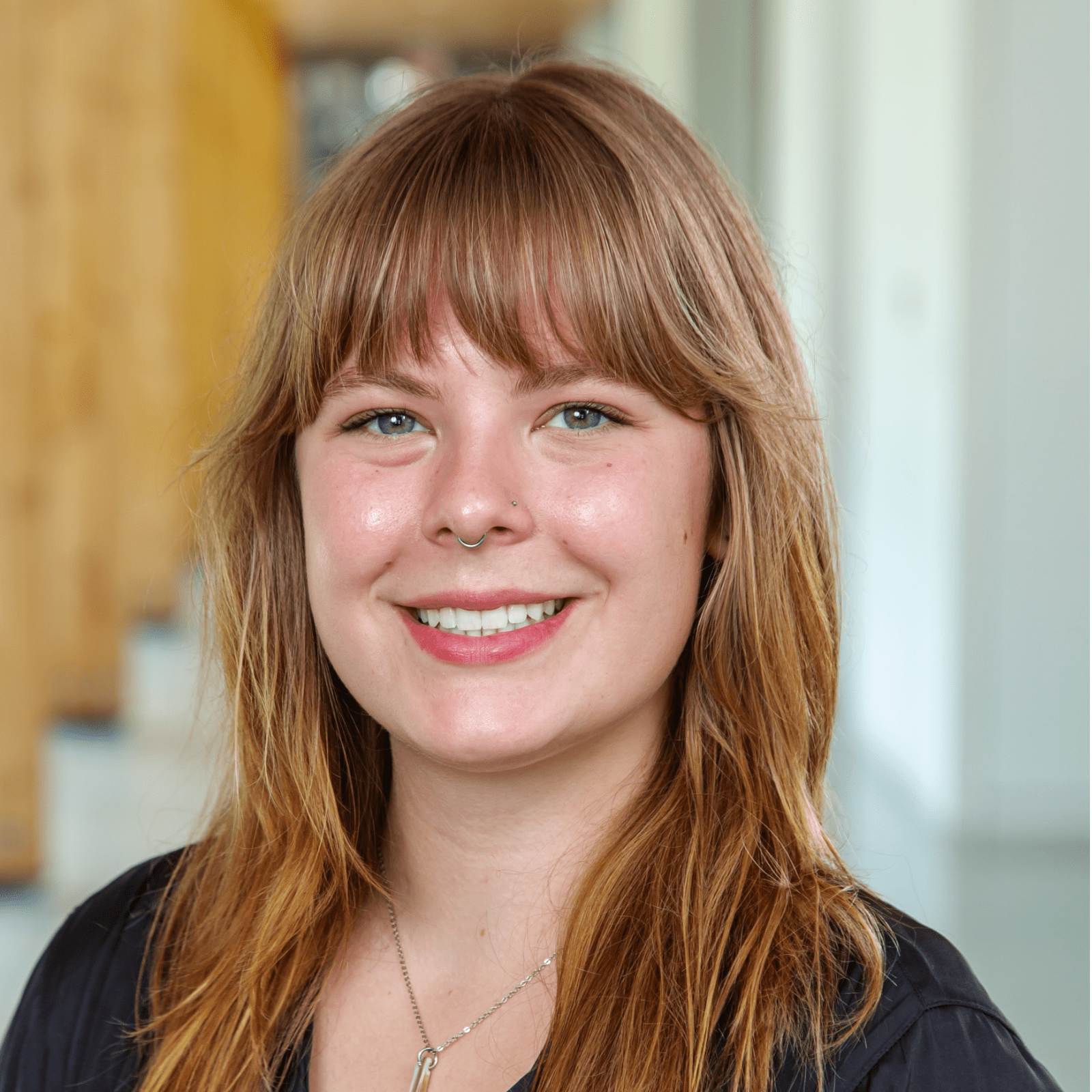
Adrienne Kuntz is a graduate student at the Balsillie School of International Affairs in the Master of Development Practice (MDP) program. She holds a Bachelor of Landscape Architecture with a Certification in Environmental Citizenship from the University of Guelph, where she has explored the interconnection of ecological systems and human wellbeing. Her undergraduate thesis examined the potential of green roofs for sustainable management and ecological restoration, while her capstone project reimagined streetscapes as a model for ecological resilience and community connection. Together, these projects highlighted her interest in how design, ecology, and policy can converge to address pressing development challenges and support inclusive, sustainable futures.
Her interest in development practice stems from the belief that meaningful solutions are those driven by the community themselves, and supported by tools that respect cultural, ecological, and social contexts. Her academic and professional experiences—ranging from sustainable plant care and landscape maintenance to community event coordination and international conference leadership—have shaped her understanding of how local initiatives connect to global challenges. She has seen firsthand how issues like climate adaptation, urbanization, and resource management are inseparable from broader questions of health, equity, and resilience.
Looking ahead, Adrienne plans to use her training in development practice to work at the intersection of environment and community wellbeing. She is especially interested in exploring how sustainable infrastructure, climate adaptation strategies, and policy innovation can be leveraged to support equitable growth and resilience in both urban and rural contexts. Her long-term
goal is to collaborate with organizations that bridge ecological systems and human needs—helping communities adapt to climate change while ensuring that development pathways remain inclusive, just, and sustainable.
What drives Adrienne is the idea that development must be both practical and visionary: grounded in measurable outcomes but also responsive to the lived experiences of people and the places they inhabit. She hopes to contribute to a new generation of development professionals who work not only across disciplines, but also across cultures and contexts, to co-create solutions that endure.