


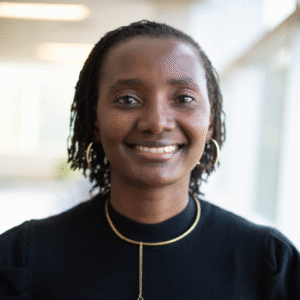
What is your current position?
Assistant Professor at the School of Environment, Resources and Sustainability, and the Department of Geography and Environmental Management, University of Waterloo.
What attracted you to your program of study at the BSIA?
After I completed my undergraduate studies, I held a yearlong Fellowship at Bread for the World, a US-based NGO working on issues related to hunger and international food aid assistance. At the time, I realized I needed to learn more about how international food systems work, including the paradoxical outcomes of food aid for farmers in developing countries. The BSIA had global experts, like Dr. Jennifer Clapp, already working on these issues.
What was the most impactful experience you had while completing your graduate degree?
The school exposed us to so many great opportunities. These ranged being part of a rich intellectual environment marked by weekly talks offered by a high caliber of professors, fellows and visiting scholars, to the graduate fellowship program that gave students an opportunity to write a policy brief. The program itself also provided opportunities for personal grow—I felt that so many people were invested in my success and wellbeing.
Did you know you wanted to pursue your PhD and teach at the university level?
I did not know that I wanted to pursue a PhD let alone become a professor. I was just passionate about the topic of agriculture and food security, particularly as it relates to smallholder farming contexts of Africa. My lived experience from Namibia, where I was born, also motivated me to want to continue to learn about how best to address food security issues under the new realities of climate change. Most of Africa’s agriculture is rainfed and the continent is severely affected by climate change. Rapid changes in rainfall and temperatures in the last few decades has had significant ramifications on agricultural productivity and food security for farmers across the continent.
How does your work help make a difference?
I am applied researcher, and my work has enabled me to work with farmers and agricultural development organizations and practitioners in East and Southern Africa. I will continue to engage these stakeholders on the ground, including to co-create knowledge with them about what changes are needed to make our food systems more sustainable and equitable. I also bring these real-life experiences to the classroom and expose my students to guest speakers working on these issues, both here at home and from around the world. I enjoy seeing my students develop their own interests in some of these topics and observe how they start to make sense of how to start to address them in their own unique ways.