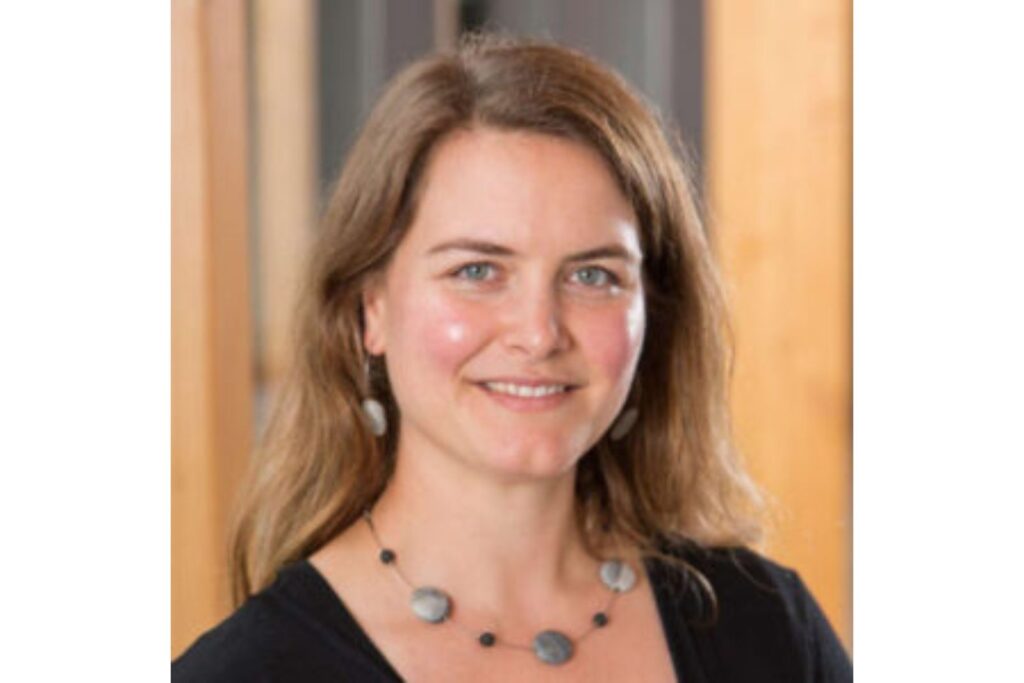
Indra Noyes‘s dissertation defence.
This dissertation is an investigation of the political processes that shape the evolution of transformative political visions in global governance spaces. Focusing on the example of agroecology as a discourse in the global governance of food, I explore the ebb and flow of this counter-hegemonic paradigm in venues of global cooperation. Guided by the research question “What explains the rise of agroecology as a significant discourse in the global governance of food?”, I present an in-depth analysis three case studies: the United Nations Food and Agriculture Organization (FAO), the Committee on World Food Security (CFS), and the United Nations Food Systems Summit (UNFSS).
Drawing on 50 expert interviews and extensive document analysis, this research project presents an analysis of agroecology as a significant discourse for food systems transformation. Guided by grounded theory research methods, I present the evolution of agroecology in global governance discourse over a hundred years, from the late 1920s to the present, in the form of interview-rich narrative text. I argue that agroecology entered global governance discourse through a complex interaction of three factors: 1) the multiple systemic crises confronting global food systems; 2) the sustained advocacy of supporters of the political vision of agroecology; and 3) the scientific aspects of agroecology creating a credible basis for diverse actors to engage with the term. While agroecology has become a significant paradigm for food systems transformation, there remain two central sites of contestation around agroecology as a discursive frame in food governance: the inclusion / exclusion of agroecology in policy recommendations and governance texts, and the holistic vision of agroecology independent of other paradigms, such as innovation. Making sense of the complex evolution and political function of agroecology as a governance paradigm, I argue that the current political function of agroecology can be conceptualized in terms of three distinct features: ambiguity, resistance, and transformation.
This research illustrates the significance of different actor groups in shaping the discourse of global food governance, the strengths and challenges of agroecology as a paradigm for the political transformation of food systems, and the political opportunity for change within governance spaces. As one of the leading ideas for food systems change, agroecology has undergone a long and contentious journey into global governance venues. I present the story of agroecology in global food governance discourse and thereby present one of the first comprehensive analyses on this topic in the scholarship. This research makes specific contributions to the scholarship: it illustrates the significance of non-state actors in shaping global governance discourse thereby adding a perspective on the complexity of the directionality of governance; it contributes a clear analysis to the co-optation of agroecology debate by analyzing the sites and mechanisms of contestation around the political vision of agroecology in global governance venues; it describes the political function of agroecology as a governance paradigm; and it illustrates in detail the mechanisms and procedures by which policy recommendations are contested.
Advisor: Dr. Jennifer Clapp
Internal: Dr. Andrea Collins and Dr. Willian Moseley
Internal/External: Dr. Daniel Henstra
External: Dr. Matthew Canfield, Leiden University
If you are interested in attending virtually, please email events@balsillieschool.ca. Please note that virtual spaces are limited. Confirmation will be sent to selected attendees prior to the defence date.