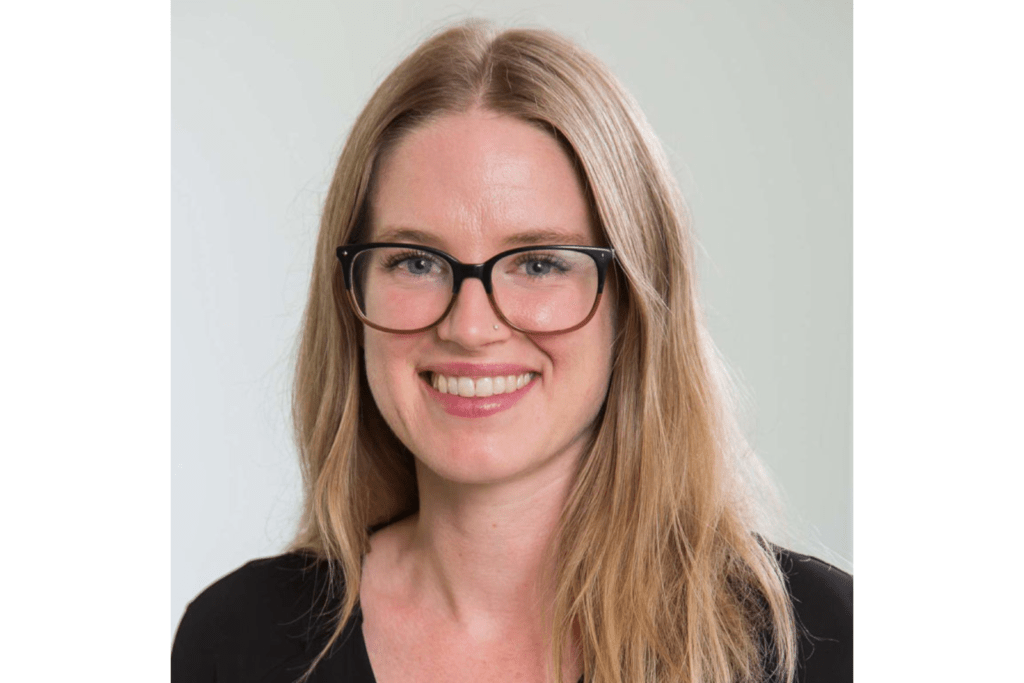
Carla Johnston‘s defence.
Abstract
This dissertation examines how community-led, relational, and multi-scale approaches can contribute to decolonizing global food governance (GFG) and to supporting self-determined action for climate resilience and food system transformation among northern Indigenous communities. It asks how Indigenous and allied advocates experience participation in global forums and connection to the local scale, and how Sambaa K’e First Nation (SKFN) and Ka’a’gee Tu First Nation (KTFN) in the Northwest Territories, Canada, can engage with global processes to advance their self-defined food system goals. In doing so, the dissertation responds to growing calls for sustainable food system transformations grounded in Indigenous food systems, agroecology, food sovereignty, and inclusive democratic processes.
Theoretically, the dissertation brings together Indigenous resurgence, Indigenous political theory, and postmodern democracy to foreground Indigenous self-determination, relational responsibilities to land and community, and decolonial, multi-scale approaches to GFG.
Methodologically, it integrates interconnected local and global case studies. At the local scale, it draws on long-term participatory action research (PAR) with SKFN and KTFN, including community-led climate change adaptation planning, interviews, workshops, and hands-on collaborative action. At the global scale, participant observation in the GFG spaces of the United Nations Committee on World Food Security (CFS) and the 2021 United Nations Food Systems Summit (UNFSS) is paired with interviews with Indigenous and allied advocates active in these forums. This two-way approach treats local action and international advocacy as part of the same political sphere while remaining grounded in accountability to Indigenous partners’ priorities.
The research finds that current GFG processes continue to reproduce colonial, state-centred, and corporate power relations that constrain Indigenous participation, dilute rights-based language, and limit the transformative potential of global policy. Indigenous and allied advocates face systemic barriers, including a lack of organizational support and meaningful involvement from agenda-setting through implementation. At the same time, they create openings for change by building coalitions, challenging knowledge hierarchies, and insisting on Indigenous Peoples’ rights, especially self-determination. With SKFN and KTFN, the research demonstrates how global agroecology frameworks were adapted to support Indigenous governance, cultural revitalization, food sovereignty, land stewardship, and climate adaptation. The SKFN Agroecology Action Plan and the KTFN firebreak food forest pilot show that international tools can become meaningful when grounded in place-based priorities and long-term, trust-based relationships.
Altogether, the dissertation argues that community-led pathways are crucial to the decolonial, multi-scale democratic processes required to transform global food systems to be sustainable and climate-resilient. It also advances the concept of ‘transcalar relationality’ to describe how “bridges” and “brokers” connect Indigenous communities’ self-defined priorities with global governance processes, shifting attention from top-down implementation to the relationships, responsibilities, and local agency that enable cross-scale connections. Ultimately, this dissertation reimagines GFG as an iterative, relational process shaped by reciprocal knowledge flows between local realities and global forums. It calls for greater Indigenous participation in global governance, increased support for community-led pathways, and sustained investment in relationships that redistribute power and uphold Indigenous self-determination.
Chairperson: Dr. Subhankar Nayak
Advisor: Dr. Alison Blay-Palmer
Committee: Dr. Andrew Spring and Dr. Jasmin Habib
Internal/External: Dr. Susan Neylan
External: Dr. Jessica Duncan, Wageningen University
If you are interested in attending this defence, please email events@balsillieschool.ca and indicate if you would like to attend virtually or in-person. Please note that spaces are limited. Confirmation will be sent to selected attendees prior to the defence date.