Humanitarian organisations operate in the space between violence and neglect. The notion of solidarity, although not new to the humanitarian sector, has re-emerged in recent discussions. EU is criminalizing refugees, migrants and undocumented people who are often presented as a threat. The impression of hatred and fear you get from people is being fed by governmental authority. The government presents people on the move—children, women and men—as a danger, as a threat to our society.
On the other hand, solidarity and humanity are criminalized every day. A range of elements contribute to creating a “hostile environment” for those engaged in humanitarian action and solidarity efforts towards migrants in the EU. In many EU Member States, administrative and criminal laws constrain and prosecute civil society actors providing humanitarian assistance to migrants or denouncing human rights abuses. Nevertheless, despite all these challenges, human rights defenders continue to make valiant efforts to assist migrants and demonstrate solidarity with migrants in vulnerable situations. Solidarity is not a crime!
About the Speaker
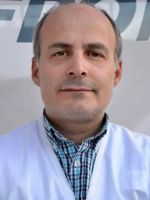 Apostolos Veizis is a physician and humanitarian leader who currently serves as the Executive Director of INTERSOS Hellas, a non-governmental organization providing protection, relief, and durable solutions for refugees and displaced populations. With over three decades of experience in humanitarian assistance, he has held senior leadership roles with Médecins Sans Frontières (MSF) and Médecins du Monde, serving as Head of Mission and Medical Coordinator across Afghanistan, Azerbaijan, the Russian Federation, Albania, Egypt, Georgia, Greece, and Turkey. He has also led or contributed to emergency assessments and evaluations in more than 25 countries across Europe, the Middle East, Central Asia, and Africa. Dr. Veizis is a consultant to the World Health Organization and the International Organization for Migration, a board member of the Centre of Competence on Humanitarian Negotiation (CCHN), and a taskforce member of the Lancet Migration European Regional Hub. He regularly lectures internationally on humanitarian health, migration, and displacement and has published widely in the field.
Apostolos will also be presenting on Friday morning at the PEGASUS Interconnected Futures Conference alongside many other distinguished speakers on migration, peace and health. The conference is also sponsored by BSIA and IMRC.
We also warmly invite you to An Evening of Dialogue, Conviviality, Food and Song on Saturday, May 2, 2026 at 6:30 PM, held at Alumni Hall, United College, featuring a fireside chat with Ziauddin Yousafzai, Malala’s father, and live entertainment by James Gordon.