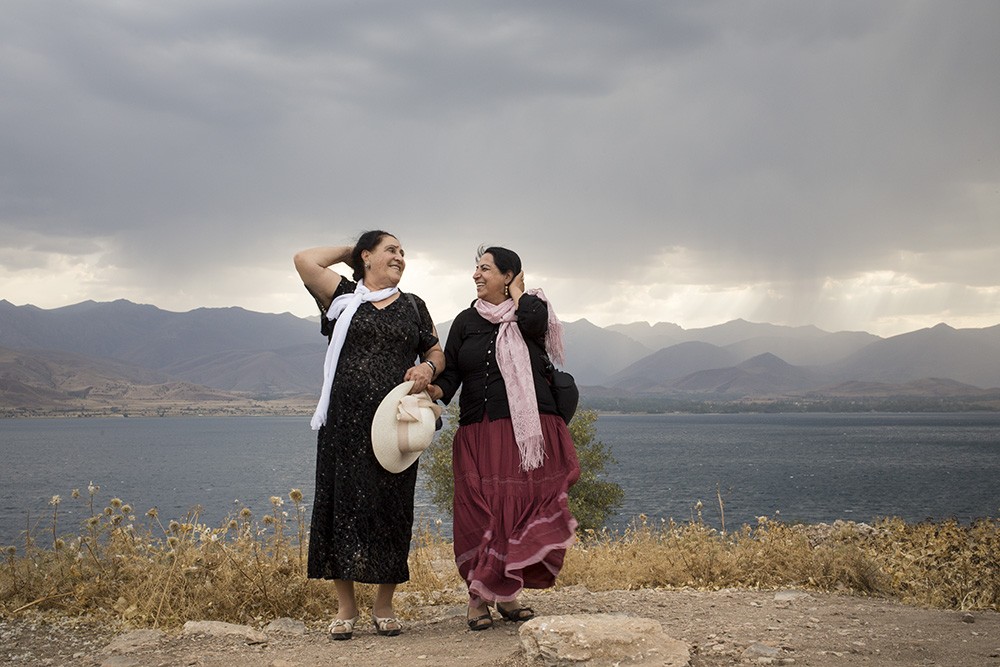
“Raise your voice!” and “Speak up!” are familiar refrains that assume, all too easily, that gaining voice will lead to empowerment, healing, and inclusion for marginalized subjects. Marlene Schäfers’s Voices That Matter reveals where such assumptions fall short, demonstrating that “raising one’s voice” is no straightforward path to emancipation but fraught with anxieties, dilemmas, and contradictions. In its attention to the voice as form, this book examines not only what voices say but also how they do so, focusing on Kurdish contexts where oral genres have a long, rich legacy. Examining the social labor that voices carry out as they sound, speak, and resonate, Schäfers shows that where new vocal practices arise, they produce new selves and practices of social relations. In Turkey, recent decades have seen Kurdish voices gain increasing moral and political value as metaphors of representation and resistance. Women’s voices, in particular, are understood as potent means to withstand patriarchal restrictions and political oppression. By ethnographically tracing the transformations in how Kurdish women relate to and employ their voices as a result of these shifts, Schäfers illustrates how contemporary politics foster not only new hopes and desires but also create novel vulnerabilities as they valorize, elicit, and discipline voice in the name of empowerment and liberation.
About the Speaker
 Marlene Schäfers is associate professor at the Department of Cultural Anthropology at Utrecht University in the Netherlands. Her research focuses on the impact of state violence on intimate and gendered lives, voice and memory, and the politics of death and the afterlife. She specializes in the anthropology of the Kurdish regions and modern Turkey. Her first monograph, Voices that Matter: Kurdish Women at the Limits of Representation in Contemporary Turkey, was published with the University of Chicago Press in 2023 and awarded the annual Book Prize of the Ottoman and Turkish Studies Association in 2024. Together Ergun Sibel Yücel, Marlene also co-authored a a Kurdish and Turkish-language biography of one of the Kurdish singers who inspired Voices that Matter, entitled Ez Gazîn Im: Jineke Dengbêj (Aram Publishers, 2021). Together with the Orient-Institut Istanbul she is currently involved in a project to digitize and make open access an archive of cassette tapes containing Kurdish women singers ’voices.