


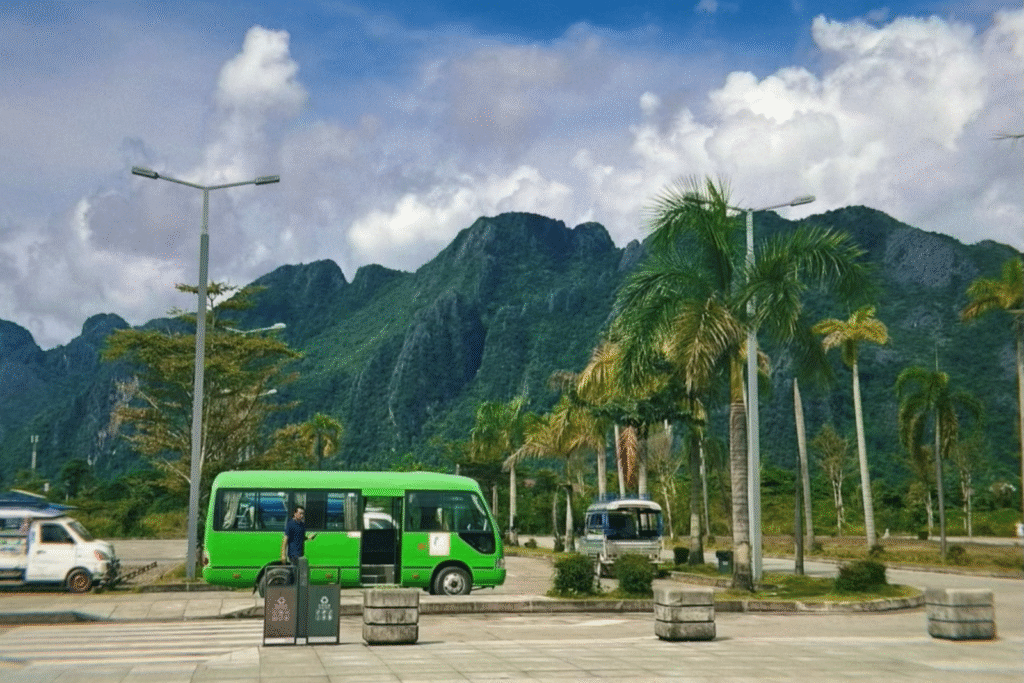
Photo credit: Nathalie Gatti
By Nathalie Gatti, MAGG
Sabaidee from Vientiane, Laos!
As I approach the end of my first month here at UNDP Lao PDR, I have so much to reflect on. My month has been absolutely jam-packed with work, travel, and incredible experiences. As one of three interns from the Balsillie School currently working in the UNDP Country Office in Laos, the first of my six months on internship has been so exciting!
Here at UNDP in Vientiane, I have been working with different teams on program development, research, private sector engagement, and the development of UNDP’s 2027-2031 Country Programme Document. As an intern, working with so many different people, sitting in on internal and external meetings, and working on an array of different projects has really given me the opportunity to learn from and contribute to multiple teams and initiatives. While I was brought into UNDP to work on the national energy transition and private sector engagement, my responsibilities have continued to grow and adapt to the needs of the organization.
Throughout the first weeks of my internship, I was working primarily on the national energy transition, involved with the development of project applications to increase the country’s renewable energy generation and further the country’s energy-related goals. From an energy transition perspective, Laos is in a really interesting position. As one of the first countries in Southeast Asia to commit to net zero by 2050, Lao PDR has ambitions to be a regional energy hub for surrounding nations. The country already exports around two thirds of its electricity production – which is primarily renewable hydropower from about 78 currently operational dams scattered around the country. Climate change and the prolonged dry season, however, have resulted in gaps in hydropower supply, leaving the country dependent on fossil fuel-based imports from Thailand. Ongoing projects here at UNDP explore avenues to both increase the energy storage potential and efficiency of existing operations and increase renewable outputs – particularly through the development of small- and large-scale solar photovoltaic production and grid connectivity projects.
More recently, I have been involved in developing campaigns and facilitating private sector engagement for Lao PDR’s National Plastic Action Partnership (NPAP), a country-level program associated with the World Economic Forum. This program, focused primarily on reducing national plastic pollution, is currently launching a campaign addressing issues associated with littering and waste collection in the country. Across Laos, litter and waste management is an incredibly visible issue. The people of Vientiane alone produce an estimated 600 tons of waste daily, most of which is uncollected by the municipality, and ends up polluting the streets and the Mekong river. While there is an established waste management system, many are unable to afford waste collection services, are unaware of the importance of waste separation, or find burning their trash to be more convenient. By humanizing the people formally and informally employed in the waste collection sector, this NPAP campaign seeks to catalyze change in this environmentally and socially harmful behaviour while raising awareness about the working conditions for waste pickers. On this campaign, I’ve been working with different stakeholders – including Government departments, other international non-governmental organizations, local private actors, and civil society – to create the most impact, increase our visibility, and highlight human stories. As this campaign progresses, I am excited to see how our planning and coordination translates to local action.
As I continue to learn, contribute to my teams, travel, and explore the city, I am so excited to continue experiencing all that Laos and Southeast Asia has to offer!
The opinions expressed in this article are those of the author(s) and do not necessarily reflect the views of the BSIA, its students, faculty, staff, or Board of Directors.