This panel, co-hosted by the Migration, Mobilities, and Social Politics Research Cluster, the Conflict and Security Research Cluster, and the Zoryan Institute, will explore the discuss the concept of “domicide” and how this can be applied to contemporary cases of violence that we are witnessing around the globe today.
Domicide refers to the deliberate and systematic destruction of living spaces or homes as a tool to displace or control populations of people. This can include the physical destruction of buildings and the erosion of a community’s sense of belonging. The Zoryan Institute and the BSIA are pleased to be welcoming leading scholars and experts from a variety of disciplines and backgrounds on this subject to introduce and contextualize the concept of domicide, and to draw important parallels to what we are witnessing in Ukraine, Gaza, Myanmar, Canada, and Nagorno-Karabakh today.
About the Speakers
 Andrew R. Basso is Adjunct Professor at Wilfrid Laurier University. Dr. Basso is a political scientist who studies atrocity crimes (genocide, crimes against humanity, and war crimes) and political violence, international human rights laws and norms, transitional justice in theory and practice, and security and strategic studies. Dr. Basso’s research focusses specifically on processes of forced displacement as a method of atrocity perpetration, domicide (the intentional destruction of homes) as a human rights violation and breach of the laws of armed conflict, and barriers to Indigenous-Settler [Re]conciliation in Canada. His latest publications include Shallow River of Tears: Canada’s Stalled Paths to Reconciliation (McGill-Queen’s University Press, 2026), Destroy Them Gradually: Displacement As Atrocity (Rutgers University Press, 2024), From Bureaucracy to Bullets: Extreme Domicide and the Right to Home. (Rutgers University Press, 2022).
 Christopher Powell (he/they) is a settler Canadian sociological theorist who has studied and written on anti-genocide, relational theory, and libertarian socialism. His works include Barbaric Civilization: A Critical Sociology of Genocide (McGill-Queens University Press, 2011); “Radical Relationism: A Proposal” in Conceptualizing Relational Sociology: Ontological and Theoretical Issues (Palgrave, 2013); “Revitalizing the Ethnosphere: Global Security, Ethnodivesity, and the Stakes of Cultural Genocide” (Genocide Studies and Prevention, 2016); and “Radical Complexity: Using Concepts from Complex Systems Theory to Think About Socialist Transformation” (New Proposal: Journal of Marxism and Interdisciplinary Theory, 2023). He is co-chair of the International School of Radical Relationism, a network of scholars using relational thinking to articulate visions of decolonial, emancipatory, and egalitarian social transformation, and is currently co-editing a collection of works by members of this network. Dr. Powell teaches as an Associate Professor at Toronto Metropolitan University.
 Dr. Bree Akesson is an Associate Professor and Canada Research Chair (Tier II) in Global Adversity and Wellbeing. Her work and research focus broadly on global social work issues, ranging from micro-level understandings of the experiences of war-affected children to macro-level initiatives to strengthen global social service systems.
Past research projects include evaluations of psychosocial program for war- affected children in Chechnya and northern Uganda, global mapping exercises on child protection training in West Africa and southeast Europe, and exploratory studies on pregnancy, pregnancy loss, and postpartum depression among Syrian refugee parents living in Lebanon 2016.
She is currently the principal investigator for a study examining the experiences of refugee children and families living in Lebanon and Canada for which she received Ontario’s 2019 Early Career Researcher award. Her book, co-authored by Dr. Andrew Basso, From Bureaucracy to Bullets: Extreme Domicide and the Right to Home, documents the impact of home loss as a result of political violence on children, families, and communities.
 Mohammed Nijim, a Ph.D. candidate in sociology and political economy at Carleton University in Canada, was born and raised as a refugee in the Al-Nuseirat Refugee Camp in the Gaza Strip. He completed his master’s degree at the University of Manitoba and his BA from Marmara University in Türkiye. For his PhD, Nijim focuses on the ongoing genocide in the Gaza Strip and the role of Israeli settler violence in transforming/destroying Palestinian society. His dissertation, titled Relational Sociology: Genocide and Settler Colonialism in Gaza, is based on in-depth interviews with genocide survivors from Gaza. Drawing on the frameworks of critical sociology and Indigenous epistemologies – particularly oral histories – his research analyzes the nature of settler violence and explores possibilities for justice and co-resistance. He published academic articles on topics such as genocide, settler colonialism, war, and food sustainability in journals including Critical Sociology, Sustainable Futures, and the International Journal of Human Rights.
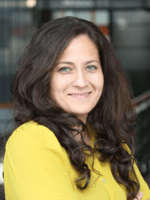
Sonya Fatah is an associate professor at Toronto Metropolitan University’s School of Journalism where she has taught since 2017. Sonya’s teaching, research and practice are invested in areas of community-based live journalism, representation in the newsroom, press freedoms and media narratives on international reporting. Sonya is the founder and director of stitched! a community-based, interdisciplinary live journalism studio at the Creative School, and is the co-lead of the Canada Press Freedom Project, which received its seed funding from the Michener Foundation. As a career journalism practitioner, Sonya has worked across mediums in a largely global context. She has studied and worked in China, India, Pakistan, South Africa, the United States, Russia and Canada. Most of Sonya’s working life as a journalist was spent overseas in India and Pakistan, covering South Asia for Canadian and U.S. publications. She was reporter-on-assignment for the Globe and Mail and later a special correspondent for the Toronto Star. She was India correspondent for the Boston-based GlobalPost, now PRI. In addition to her journalism, she also develops audio documentaries and created a full-length feature doc, I, DANCE.
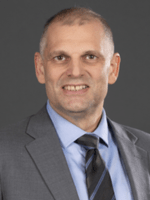
Henry C. Theriault, Ph.D., is Associate Provost at Worcester State University in the United States, after teaching in its Philosophy Department 1998-2017. He coordinated WSU’s Human Rights Center 1999-2007. With a background in radical social and political as well as continental philosophy, Theriault researches genocide denial, genocide prevention, post-genocide victim-perpetrator relations, reparations, and mass violence against women and girls.
He has lectured around the world and published numerous journal articles and chapters. He is lead author of the Armenian Genocide Reparations Study Group’s 2015 Resolution with Justice, and, with Samuel Totten, co-authored The United Nations Genocide Convention: An Introduction (University of Toronto Press, 2019), and, with Chunhui Peng, coeditor of Aftermath of Mass Violence: A Comprehensive Approach through Theory and Case Studies (Bloomsbury, forthcoming).
Theriault’s work has appeared in English, Spanish, Armenian, Turkish, and other languages. Theriault served two terms as president of the International Association of Genocide Scholars, 2017-2019 and 2019-2021. He has been founding co-editor of Genocide Studies International since 2012 and co-edited Genocide Studies and Prevention 2007-2012. He currently serves as vice-chair of the executive committee of the board of directors of the National Association for Armenian Studies and Research and is a member of the Armenian Society of Fellows.