


INTERNSHIPS

Gain Real World Experience
A compulsory component of the MA in Global Governance and an option of both the PhD in Global Governance and the Master of International Public Policy, the internship term is designed to give students valuable work experience with professional organizations working in the field of global governance.
Jacob Dinn (left in photo), a MA in Global Governance student, meets the PM at the Canadian Embassy during his internship in Washington DC
Dispatches from the Field
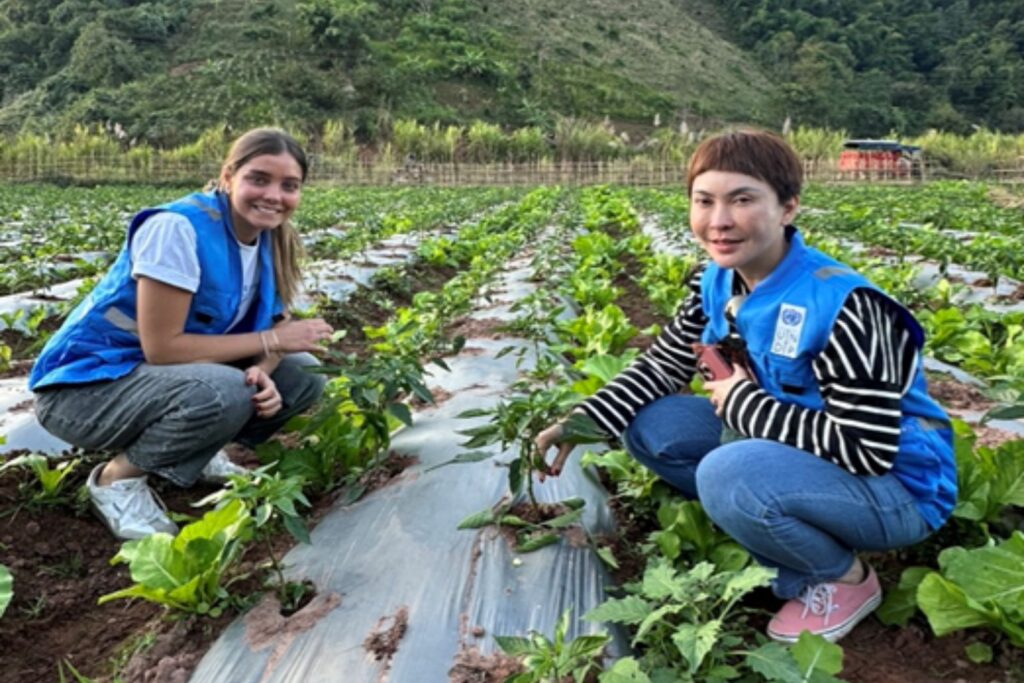
Have you ever wondered what it’s like to work for the United Nations or an international NGO? Then check out the “Dispatches from the field”, a blog series to learn about the rewards and challenges of doing an international internship (even virtually) written by BSIA students. This could be you.

Master of Arts in Global Governance Internships
Internships are an integral part of the Master of Global Governance program. They are designed to give students valuable work experience with professional organizations working in the field of global governance. Students in the MA in Global Governance program have the option of completing their internship in either the third or fourth semesters of the program.
Since 2017, students have interned at a variety of governmental and non-governmental organizations, some of which include:
Asia Pacific Foundation of Canada (remote)
Accountable Now (Berlin, Germany)
Bali Process on People Smuggling, Trafficking in Persons and Related Transnational Crime (Bangkok, Thailand)
Bonn International Centre for Conversion (Bonn, Germany)
Canadian Council of Innovators (remote)
Canadian Embassy in Washington, DC (Washington, DC, USA)
Canadian Heritage (Ottawa, Canada)
Canadian Shield Institute (remote)
Centre for International Governance Innovation (Waterloo, Canada)
Centre for International Sustainable Development Law (Virtual)
CIVICUS: The World Alliance for Citizen Participation (Johannesburg, South Africa)
Department of National Defence (Ottawa, Canada)
Environment and Climate Change Canada (Ottawa, Canada)
European Training and Research Centre for Human Rights and Democracy (Graz, Austria)
GAVI (The Vaccine Alliance) (Geneva, Switzerland)
European Parliament (Brussels, Belgium)
eSentire (Waterloo, Canada)
Global Affairs Canada (Ottawa, Canada; various embassies)
Global Arena Research Institute (Prague, Czech Republic)
Immigration, Refugees and Citizenship Canada (Ottawa, Canada)
Innovation, Science and Economic Development Canada (Ottawa, Canada)
Institute for Peace and Diplomacy (Toronto, Canada)
The International Organization for Migration (Pretoria, South Africa)
Ken Seiling Waterloo Region Museum (Waterloo, Canada)
Moonshot CVE (remote)
NATO Association of Canada (Toronto, Canada)
Natural Resources Canada (International Affairs Division) (Ottawa, Canada)
Northern Policy Institute (remote)
Ontario Ministry of Transportation (Toronto, Canada)
OVHcloud (remote)
Office of the Auditor General of Canada (Ottawa, Canada)
Privy Council Office (Ottawa, Canada)
Project Ploughshares (Waterloo, Canada)
Public Health Agency of Canada (Ottawa, Canada)
Schwartz Reisman Institute for Technology and Society (Toronto, Canada)
Scotia Bank (Toronto, Canada)
Treasury Board of Canada (Ottawa, Canada)
UNESCO (New Delhi, India (remote)
UNICEF-UN Girls Education Initiative (New York, USA)
United Nations Development Programme (Addis Ababa, Ethiopia; Dhaka, Bangladesh; Hanoi, Vietnam; Kathmandu, Nepal; Kiev, Ukraine; Kigali, Rwanda; Jakarta, Indonesia; Mexico City, Mexico, Panama City, Panama; Phnom Penh, Cambodia; Windhoek, Namibia; Suva, Fuji (remote); Vientiane, Laos)
UNFCCC (Remote)
United Nations Habitat (Nairobi, Kenya)
United Nations Industrial Development Office (Vienna, Austria)
United Nations Office on Drugs and Crime (Yangon, Myanmar; Bangkok, Thailand)
United Nations Population Fund (Dhaka, Bangladesh)
United Nations Secretariat (Strategic Communications Division, Dept of Public Information) (New York, USA)
United Nations World Food Programme (Phnom Penh, Cambodia; Rome, Italy)
United Nations Women (Istanbul, Turkey)
PhD Internships
After the completion of the comprehensive exams, students in the joint-PhD program may, during their second year, complete a four to six-month internship working on global governance issues in the public or private sector, at a research institute, or for a non-governmental organization. This optional internship experience is designed to enable students to make practical applications of the problems and principles they have studied and to equip them with relevant research and problem-solving skills. It is also designed to help students develop a dissertation research topic.
After completing the internship, students are required to present, in a public forum, a written account of the experience. This presentation will help the presenter think through the theoretical and/or empirical implications of their experience for the study of global governance, and will also contribute to the learning environment of other students in the program.
